Showing posts with label Dorset. Show all posts

Saturday, December 27, 2014

Kingston Lacy - More than just a house.

In a previous post I talked about the amazing Corfe Castle. Corfe Castle is part of the Kingston Lacy Estate. Run for hundreds of years by the Bankes family
Kingston Lacy front view - all photographs in this blog post
owned by Cassandra Samuels


 William Bankes was by far the most interesting of the characters who  lived in this house. A good friend of the poet Byron (who described him as 'my collegiate pastor, and master, and patron.' who 'Ruled the Roast - or rather the Roasting - and was father of all mischiefs')


The very ornate fireplace.


 He was an avid collector of art and antiquities and Kingston Lacy has a large collection of Egyptian artifacts he acquired during his travels.  He spent some time in the peninsular following Byron and William Beckford to Portugal and Spain buying art as he went. He enjoyed the gypsy life and his travels lasted eight years.


All ready for dinner


 About 1820 William returned home and dedicated most of his life to the restoration and re-modelling of Kingston Lacy. He had inherited it after the death of his brother Henry who died in 1834 in a shipwreck en route to Sicily.


The bell pull chart so that the servants knew which room was requesting tea.

Thomas Cundy Jr submitted three schemes for remodeling the interior earlier but they had been rejected by Henry. Now he was dead William was free to work on Kingston Lacy. William belonged to the romantic generation  that had been inspired by Fonthill, William Beckford's Fantasy home in Wiltshire. Bankes along with Charles Barry took six years to transform Kingston Hall with the vision inspired by Indigo Jones and to be more modern to live in.

In 1841 William was accused of indecently exposing himself with a soldier of the Foot Guards in Green Park. In 1833 a similar charge had been dropped only after the intervention of the Duke of Wellington and other influential friends. Now he jumped bail and fled to Italy but still commissioned art to be sent back to Kingston Lacy, asking his sister (Lady Falmouth) to oversea the decoration. Even though he was still exiled there is proof that he did secretly come home to visit his beloved Kingston Lacy in his declining years and it must have been a great comfort to have at last seen his home decorated and remodeled in the theme and way he had planned all those many years ago.
The sarcophagus of Amenomope that sits in the south garden given to William Bankes by Henry Salt in 1822.
William engaged Giovanni Belzoni (a former strong man) to bring the Philae Obelisk to Kingston Lacy (which took 20years)


Friday, June 20, 2014

Corfe Castle - More than just a ruin.

Corfe Castle in Dorset stands proud atop a mighty hill and although it is in ruins it is still one of the most visited castles in England.


All photos owned by Cassandra Samuels

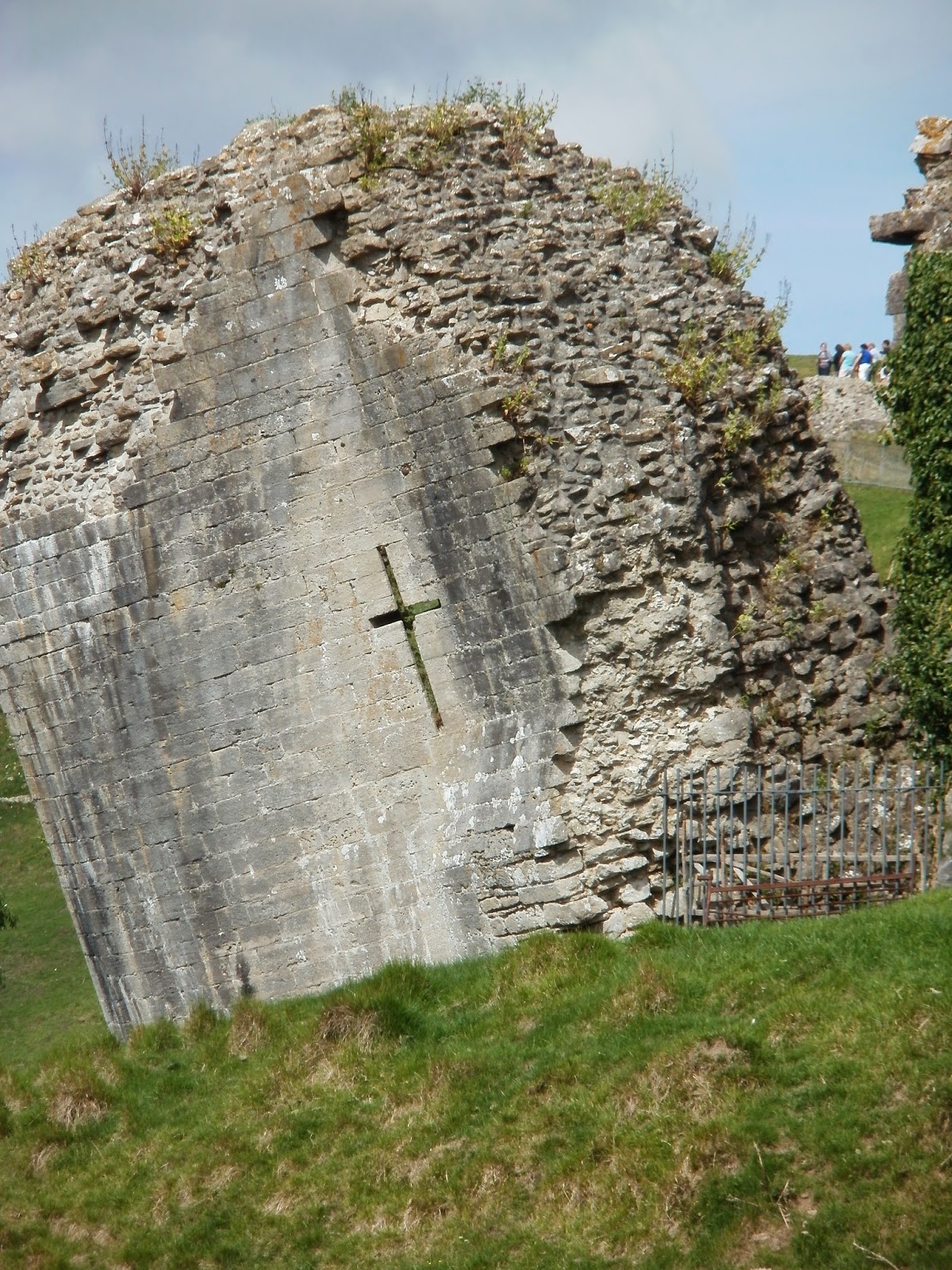
 When I visited Corfe Castle in 2010 with my husband we both felt it was a special place. I spent a lot of my time touching the leaning walls and listening to our guide in fascination. There is a lovely walk from the car park along a path which had a bubbling brook along side. Cheeky squirrels tried to throw nuts and berries down on us as we passed. Then up the hill to the town centre.  A further trek up another hill and the ruin envelopes you and takes you back in time. It's walls whisper of a tragic history.


A castle with a dark past
In 978, before Corfe the castle was built, King Edward the Martyr was murdered by his stepmother. She wanted to put her own son, Ethelred ‘the Unready’, on the throne. While Edward was hunting in the area he stopped off at Corfe where Elfryda gave him a goblet of wine. It wasn't poisoned as you might think but while he was drinking his wine she treacherously had him stabbed in the back.


 Corfe Castle was built by William the Conqueror after his arrival in Britain in 1066. It was used by the surrounding towns as shelter in times of trouble. Much of the Isle of Purbeck was a Royal Forest. Death was assured if you were caught hunting game without royal permission.


In 1643, and after the death of her husband during the Civil War, Lady Mary Bankes successfully defended the castle. However, in a second siege in 1646 betrayal by a member of her garrison led to their capture. 


They deliberately demolished the castle. Leaving the ruin we saw on a lovely English summer day. Much of the missing stone can be found in the houses of Corfe Castle Village.


There is plenty to do at Corfe and the surrounding areas. I recommend going to Kingston Lacy which was also owned by the Banks family until both were given to the National Trust.


Join me soon when I take you through Kingston Lacy House.